کش کردن قالبها
قبل از اینکه قابلیتهای بیشتری به قالبهای HTML خود اضافه کنیم، زمان مناسبی است تا بهینهسازیهایی در کدبیس خود انجام دهیم. در حال حاضر دو مشکل اصلی وجود دارد:
هر بار که یک صفحه وب را رندر میکنیم، برنامه ما فایلهای قالب مربوطه را با استفاده از تابع
template.ParseFiles()میخواند و تجزیه میکند. میتوانیم با تجزیه فایلها یک بار — هنگام راهاندازی برنامه — و ذخیره قالبهای تجزیه شده در یک کش درون حافظه، از این کار تکراری اجتناب کنیم.کد تکراری در handlerهای
homeوsnippetViewوجود دارد و میتوانیم با ایجاد یک تابع کمکی، این تکرار را کاهش دهیم.
بیایید ابتدا نکته اول را حل کنیم و یک مپ درون حافظه با نوع map[string]*template.Template برای کش کردن قالبهای تجزیه شده ایجاد کنیم. فایل cmd/web/templates.go خود را باز کنید و کد زیر را اضافه کنید:
package main

import (
    "html/template" // New import
    "path/filepath" // New import

    "snippetbox.alexedwards.net/internal/models"
)

...

func newTemplateCache() (map[string]*template.Template, error) {
    // Initialize a new map to act as the cache.
    cache := map[string]*template.Template{}

    // Use the filepath.Glob() function to get a slice of all filepaths that
    // match the pattern "./ui/html/pages/*.tmpl". This will essentially gives
    // us a slice of all the filepaths for our application 'page' templates
    // like: [ui/html/pages/home.tmpl ui/html/pages/view.tmpl]
    pages, err := filepath.Glob("./ui/html/pages/*.tmpl")
    if err != nil {
        return nil, err
    }

    // Loop through the page filepaths one-by-one.
    for _, page := range pages {
        // Extract the file name (like 'home.tmpl') from the full filepath
        // and assign it to the name variable.
        name := filepath.Base(page)

        // Create a slice containing the filepaths for our base template, any
        // partials and the page.
        files := []string{
            "./ui/html/base.tmpl",
            "./ui/html/partials/nav.tmpl",
            page,
        }

        // Parse the files into a template set.
        ts, err := template.ParseFiles(files...)
        if err != nil {
            return nil, err
        }

        // Add the template set to the map, using the name of the page
        // (like 'home.tmpl') as the key.
        cache[name] = ts
    }

    // Return the map.
    return cache, nil
}
مرحله بعدی، مقداردهی اولیه این کش در تابع main() و در دسترس قرار دادن آن برای handlerهای ما به عنوان یک وابستگی از طریق ساختار application است، به این صورت:
package main

import (
    "database/sql"
    "flag"
    "html/template" // New import
    "log/slog"
    "net/http"
    "os"

    "snippetbox.alexedwards.net/internal/models"

    _ "github.com/go-sql-driver/mysql"
)

// Add a templateCache field to the application struct.
type application struct {
    logger        *slog.Logger
    snippets      *models.SnippetModel
    templateCache map[string]*template.Template
}

func main() {
    addr := flag.String("addr", ":4000", "HTTP network address")
    dsn := flag.String("dsn", "web:pass@/snippetbox?parseTime=true", "MySQL data source name")
    flag.Parse()

    logger := slog.New(slog.NewTextHandler(os.Stdout, nil))

    db, err := openDB(*dsn)
    if err != nil {
        logger.Error(err.Error())
        os.Exit(1)
    }
    defer db.Close()

    // Initialize a new template cache...
    templateCache, err := newTemplateCache()
    if err != nil {
        logger.Error(err.Error())
        os.Exit(1)
    }

    // And add it to the application dependencies.
    app := &application{
        logger:        logger,
        snippets:      &models.SnippetModel{DB: db},
        templateCache: templateCache,
    }

    logger.Info("starting server", "addr", *addr)

    err = http.ListenAndServe(*addr, app.routes())
    logger.Error(err.Error())
    os.Exit(1)
}

...
پس، در این مرحله، یک کش درون حافظه از مجموعه قالب مربوطه برای هر یک از صفحات خود داریم و handlerهای ما از طریق ساختار application به این کش دسترسی دارند.
حالا بیایید مشکل دوم کد تکراری را حل کنیم و یک متد کمکی ایجاد کنیم تا بتوانیم به راحتی قالبها را از کش رندر کنیم.
فایل cmd/web/helpers.go خود را باز کنید و متد render() زیر را اضافه کنید:
package main

import (
    "fmt" // New import
    "net/http"
)

...

func (app *application) render(w http.ResponseWriter, r *http.Request, status int, page string, data templateData) {
    // Retrieve the appropriate template set from the cache based on the page
    // name (like 'home.tmpl'). If no entry exists in the cache with the
    // provided name, then create a new error and call the serverError() helper
    // method that we made earlier and return.
    ts, ok := app.templateCache[page]
    if !ok {
        err := fmt.Errorf("the template %s does not exist", page)
        app.serverError(w, r, err)
        return
    }

    // Write out the provided HTTP status code ('200 OK', '400 Bad Request' etc).
    w.WriteHeader(status)

    // Execute the template set and write the response body. Again, if there
    // is any error we call the serverError() helper.
    err := ts.ExecuteTemplate(w, "base", data)
    if err != nil {
        app.serverError(w, r, err)
    }
}
با تکمیل این کار، حالا میتوانیم نتیجه این تغییرات را ببینیم و کد در handlerهای خود را به طور چشمگیری ساده کنیم:
package main

import (
    "errors"
    "fmt"
    "net/http"
    "strconv"

    "snippetbox.alexedwards.net/internal/models"
)

func (app *application) home(w http.ResponseWriter, r *http.Request) {
    w.Header().Add("Server", "Go")

    snippets, err := app.snippets.Latest()
    if err != nil {
        app.serverError(w, r, err)
        return
    }

    // Use the new render helper.
    app.render(w, r, http.StatusOK, "home.tmpl", templateData{
        Snippets: snippets,
    })
}

func (app *application) snippetView(w http.ResponseWriter, r *http.Request) {
    id, err := strconv.Atoi(r.PathValue("id"))
    if err != nil || id < 1 {
        http.NotFound(w, r)
        return
    }

    snippet, err := app.snippets.Get(id)
    if err != nil {
        if errors.Is(err, models.ErrNoRecord) {
            http.NotFound(w, r)
        } else {
            app.serverError(w, r, err)
        }
        return
    }

    // Use the new render helper.
    app.render(w, r, http.StatusOK, "view.tmpl", templateData{
        Snippet: snippet,
    })
}

...
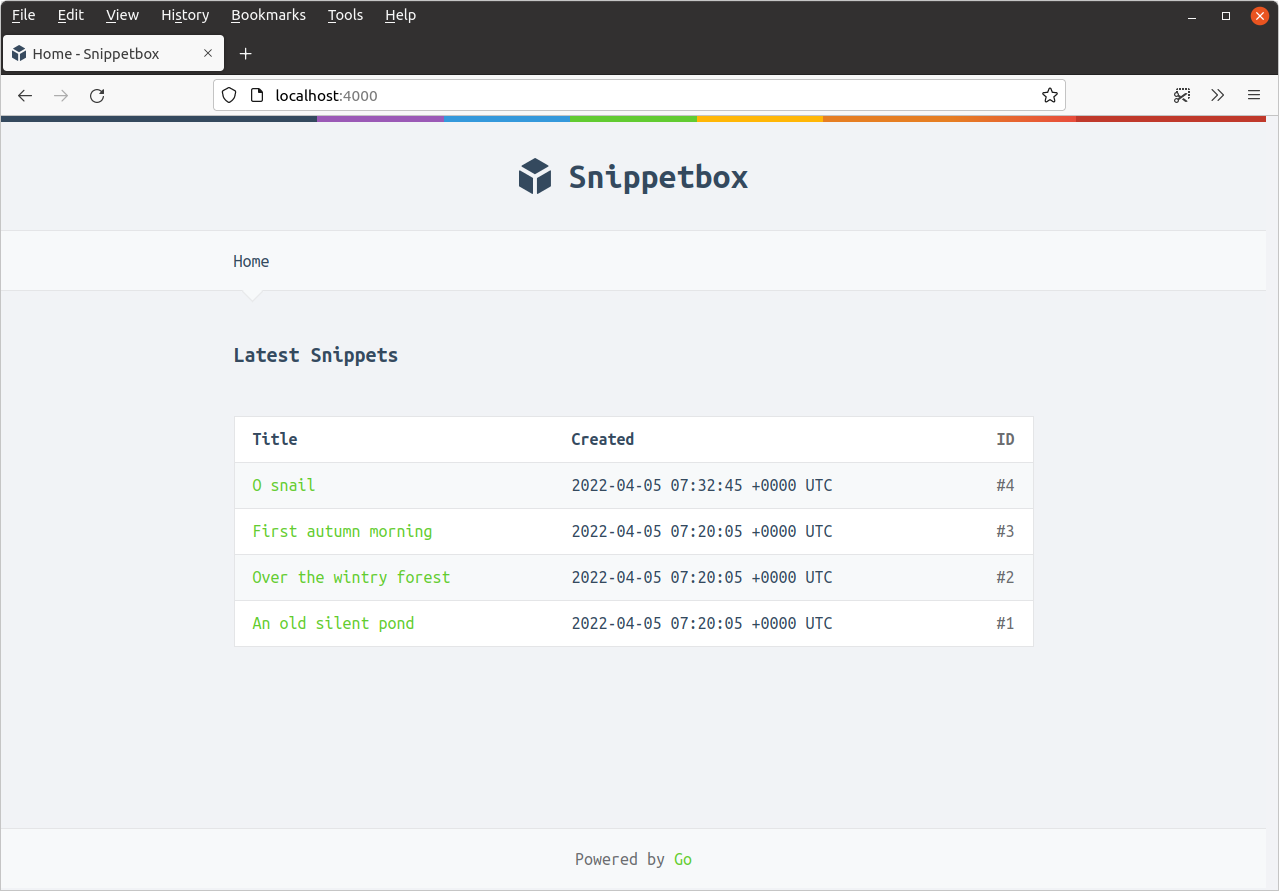
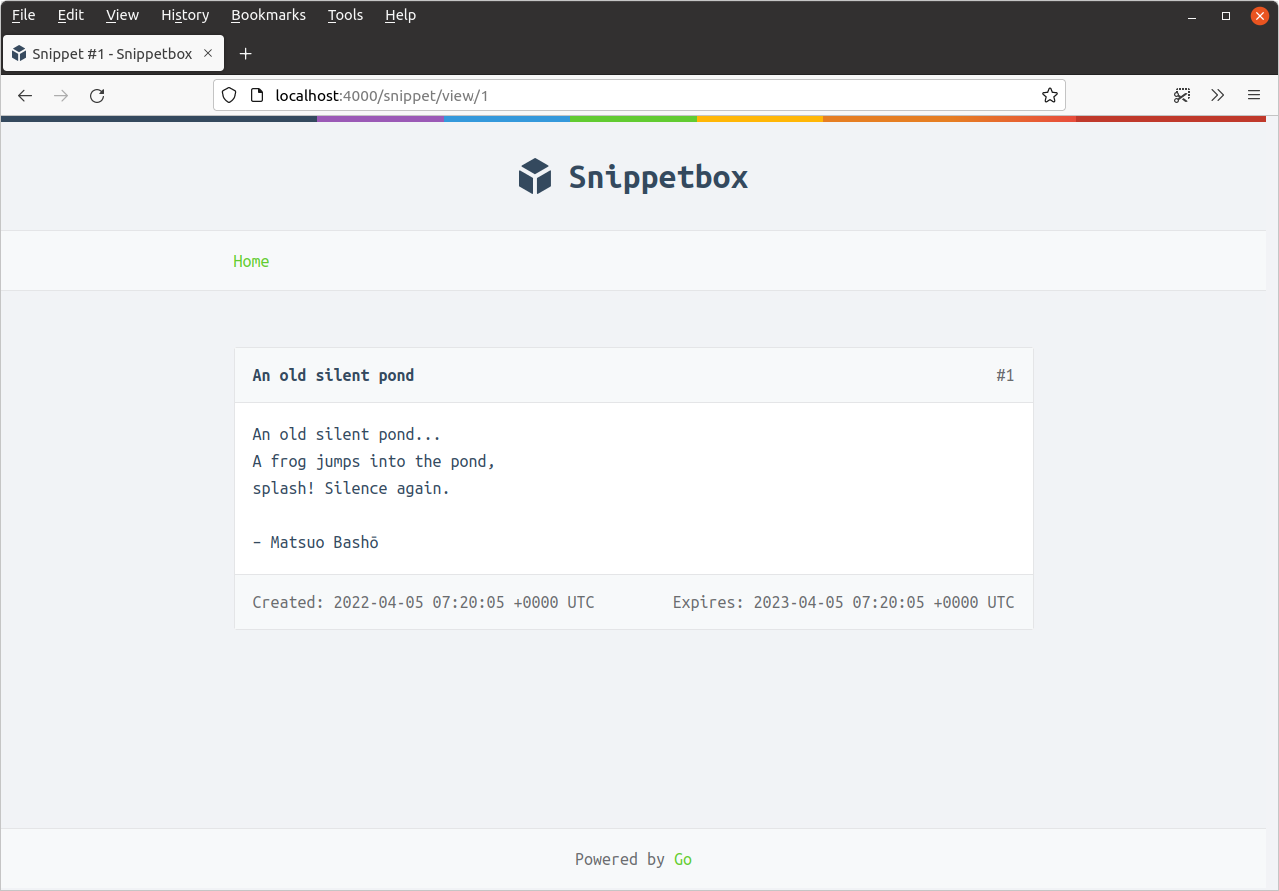
اگر برنامه را مجدداً راهاندازی کنید و دوباره به http://localhost:4000 و http://localhost:4000/snippet/view/1 مراجعه کنید، باید ببینید که صفحات دقیقاً به همان روش قبلی رندر (render) میشوند.
تجزیه خودکار بخشهای جزئی
قبل از ادامه، بیایید تابع newTemplateCache() خود را کمی انعطافپذیرتر کنیم تا به طور خودکار همه قالبها در پوشه ui/html/partials را تجزیه کند — به جای اینکه فقط فایل nav.tmpl ما را تجزیه کند.
این کار زمان، تایپ و باگهای احتمالی را در صورت تمایل به افزودن بخشهای جزئی اضافی در آینده، برای ما صرفهجویی میکند.
package main

...

func newTemplateCache() (map[string]*template.Template, error) {
    cache := map[string]*template.Template{}

    pages, err := filepath.Glob("./ui/html/pages/*.tmpl")
    if err != nil {
        return nil, err
    }

    for _, page := range pages {
        name := filepath.Base(page)

        // Parse the base template file into a template set.
        ts, err := template.ParseFiles("./ui/html/base.tmpl")
        if err != nil {
            return nil, err
        }

        // Call ParseGlob() *on this template set* to add any partials.
        ts, err = ts.ParseGlob("./ui/html/partials/*.tmpl")
        if err != nil {
            return nil, err
        }

        // Call ParseFiles() *on this template set* to add the  page template.
        ts, err = ts.ParseFiles(page)
        if err != nil {
            return nil, err
        }

        // Add the template set to the map as normal...
        cache[name] = ts
    }

    return cache, nil
}